-
Body pain and Enlightenment

Questioner:
Hi Ly, I’ve always wondered this. Body pain is suffering, isn’t it true? (That kind of illness since childhood, the disease cannot be cured. Except for the worry and fear, which is a virtual suffering). So the need to solve the pain and fatigue of the sick body is a practical need, right? From there, I’d find medicine, or to the healing practitioners, or the energy workers to see where my bio-energy map is stuck… But as I was cultivating this path, things turned out wrong, my energy got even more messed up, and then I get involved in the invisible realm and things… (although the energy helps me to be less painful and I don’t have to take medicine). Then it’s hard to go on any path, sister?
Should I simply be aware that I am in such pain (without worrying) day after day, year after month, until the day I die, sister?
Phan Y Ly:
Your question shows confusion, inability to distinguish between different kinds of sufferings, as well as the different purposes of different paths. If you can distinguish clearly, you will no longer be confused and conflicted. I based on the definition in wikipedia to explain more:- Worldly Suffering (sa. duḥkha-duḥkha)
That is, suffering because of the sufferings of the mundane world, such as suffering from hunger and thirst, suffering from wars. This is the lowest level of suffering that anyone can feel. (Wikipedia)
👉 This suffering includes the pains in the body that you are talking about, this suffering is what everyone has to taste. No matter if one has attained enlightenment or not, one will still encounter birth, old age, illness, and death in the body.
When the body is sick, hungry and cold, it will need medical intervention or other forms to ensure the survival and health of the body. Even when Buddha tried to practice asceticism, he realized that he suffered better than all those who had tried asceticism and still did not attain enlightenment. Therefore, the misunderstanding of having to make the body miserable in order to realise Truth is a wrong view that the Buddha himself realized through his own experimentation. He himself saw clearly, if he continued to self-torture like this, the body lacked nutrients would be difficult to survive, if he died, he would still not realise Truth, the FINAL GOAL would still not be achieved. Because he realized that, he decided to change his attitude and method, he drank the milk bowl as an offering, he ate again .. to preserve his life, so that he could continue on the path of finding truth.
While practicing self observation/ awareness (also known as vipassana, insight, seeing reality as it is, etc.), one of the subject to observe and see how phenomena arise and pass away, is the contemplation of pain in the body. Knowing how one’s body and mind reacts when encountering unsatisfactory situations… are insights cultivated in this kind of observation. But this is also where many truth seekers feel confused and misunderstand that one has to leave the body to die in order to attain enlightenment. Actually, it’s not like that at all, one can just simply watch her body and mind reactions while waiting for the doctor to arrive, while taking the medicine, while in pain or numbness from surgery etc.
So, the intervention and treatment is the thing people do for survival, not for enlightenment. And observing the reactions of the body and mind is what is needed to become enlightened, which is to see the truth about how our body and mind work. Thus, two different interventions for two different purposes.
But many people mistakenly believe that healing, or energy work.. is part of the practice to enlightenment. Such is Mistake. That’s it, it’s not that no healing or treatment is allowed.
- Suffering due to changes (sa. vipariṇāma-duḥkha)
It means suffering because of change. At this level, even seemingly pleasurable experiences are suffering. The reason people feel such experiences as pleasurable is because they have compared them with painful experiences. That joy is relative. Meanwhile, things are always changing, so after a while, those seemingly happy experiences are just boring, unsatisfactory, the joy is gone. (Wikipedia)
👉 This is the suffering of most people, but when they clearly see the coming and going, birth and death, the continuous change of states and things.. then that person will also gradually “indifferent”, no longer depended psychologically into these changes.
- Self Inflicted Suffering (sa. saṃskāra-duḥkha)
That is, suffering covers the three worlds, the six realms (all beings in samsara). The illustration of this suffering is the afflicted aggregates of beings, and this afflicted aggregate is not only the basis for suffering in this life, but also the basis for suffering in the next life. This suffering continues to drag from one life to another as long as people are still in ignorance.The awareness of suffering on this level is the most profound (Wikipedia)
👉 this is the suffering that comes from the torments, worries, and judgments, more broadly, all planning and intentions that lead to the arising of actions in our thoughts, behaviors, and words.
The practice is to observe how these habits are controlling us, to see how it leads us into the wrong place. Seeing through it means we are no longer deceived and led by it anymore. Without being led by the mind programming, it is called “letting go” or “no longer going back to this state”, or “liberation (from the mind programming)”
That way, when you’re sick or in pain, you can still see any reactions and changes in your mind and body. You can do treatment and take care of your body, at the same time see how the pain is rising or falling, and what inhibitions are emerging.. etc..
Another reason why contemplating pain, or suffering in the body, is quite effective in recognizing suffering (pain, dissatisfaction), impermanence (continuous change), and non-self (body is not our own or accords to our own will) .. is because one of the greatest programming of human mind is the thought of clinging to this body as one’s own, that it must follow one’s will.. But when we are sick and can’t intervene, that’s when it’s clear whether our bodies is in our will or not.
As you can see, if you just stop at healing the body with interventions (medicine, energy, etc.), it will only TEMPORARYLY reverse 1 of the 3 sufferings of sentient beings. But even when that suffering is thought to be very miserable, the fact it is still only a superficial suffering compared to the other two sufferings, that is, not accepting changes, and self-inflicted pains.
Meanwhile, if you practice contemplating the body and mind when possible, you can be liberated, your mind is no longer being dragged by the pain of the body or get stuck in psychological tortures. More over, even though the pain in the body is still there, it is already scientifically proven that calmly accepting it is an effective pain reliever, compared to fighting with it.
So you can totally practice both: having therapeutic interventions within your ability, at the same time observing your body and mind.
This way, your mind is tranquil, while your body is still taken care of
Those who realize this truth through physical suffering, as far as I knows, are not those who deliberately do not receive treatment and would rather lie down and wait for death to attain enlightenment.
I had spent 17hrs of labor of my 2nd child, in observing body and mind, not because I chose to delay his birth in order to attain enlightenment, but because of the circumstances made me suffer 17 hours of pain, instead of fighting back, she observed and accepted it.
Another monk, suffering from a painful festering infection, with no doctor in the forest, has struggled to fight the pain for a while, and finally he gave up and be diligent in mindfulness, awareness, contemplation. As he observed the pain, he could see how nature operates.
Hope my answer helps you to clear the confusion.
Questioner:
Thank you very much, Ms. Ly, you explain very conscientiously. ❤️ I have read it over and over again. I feel like this.
- It is true that the suffering caused by the body’s pain has nothing to do with the suffering for the mind that I created, sister. The pain can be endured, but the mind panics, worries, fears the pain, even though the pain has passed, it is still afraid that it will come back at some point (following the self-created suffering that is multiplied many times over), my mind starts to find ways to prevent me from falling into such a situation again, and even though the feared situation has not happened yet, I have scared myself.
- I don’t misunderstand that the healing energy meditation methods are cultivating enlightenment. I also don’t misunderstand that one have to let the body suffer until death to seek enlightenment. But as you said, I confused the purpose of two different interventions. The problem I am having is that when I try to cure myself, I will be led to see this person, that method, but it will start causing other pain in the body, I would be compelled to follow mandatory regulations, or forced to be involved with invisible realm… All this makes me start to feel tired and miserable again. And then I wouldn’t know what to do. I keep thinking that doing anything that adds to the suffering in the body, to the unsatisfactory thing of my life, is going the wrong way. While I was suffering, I did not know how to observe clearly this suffering, how my mind fights back. Am I realising the right thing, sister? I should still look for ways to cure the body, and whatever happens next causes suffering, I should just observe the body and mind, so that I don’t get dragged by it. What is no longer suitable, I will be led to another one. The important thing is to always observe the body and mind no matter what happens. I understand that, is it correct?
- Can you share more about Self-inflicted Suffering for me?
Phan Y Ly:
Self inflicted Suffering is the suffering that you just listed: “the mind panics, worries and fears, should find ways to prevent it..v.v.” All that suffering is self pain, self fear, finding ways to struggle, finding yourself stuck.. and then putting yourself in the wrong situation.. Finding treatment must also be in moderation, because excessive anxiety also conceal your wisdom, sometimes even leading to more serious consequences. Therefore, observing the body and mind, i.e having wisdom, should be put first. In that sobriety and composure, it is possible to evaluate or encounter the right methods that are good for you.If you really let go of the mind, accept anything even the worst, in a calm and clear insight, then that is freedom.
Questioner:
Thank you so much, I understand now.
Phan Y Ly:
As I have said, the realisation of the truth that this body is not your own, due to you, in your control.. is one of the most difficult. If you find yourself having to learn this lesson over and over again, maybe try changing your attitude and take an honest observation?
-
Heaven vs Hell
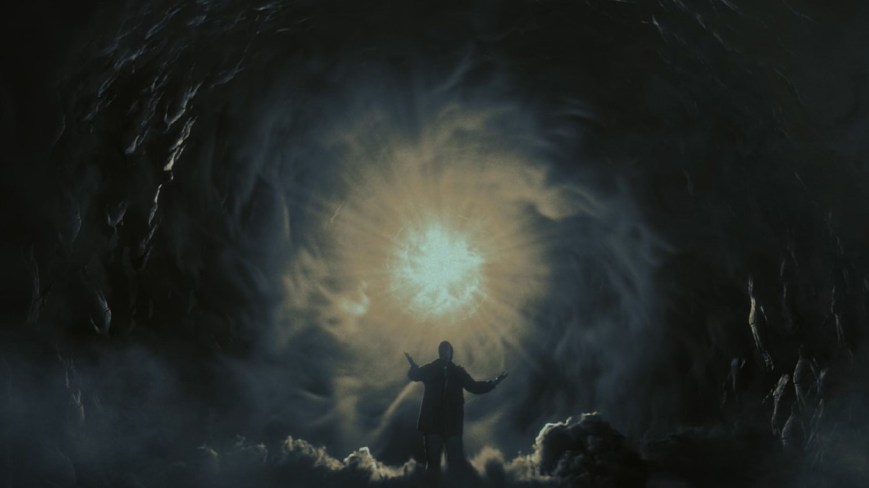
HELL
So you think?
There’s a more painful place?
than the torment, the deadlock, the suppression of your mind?
Do you think there is a more terrible punishment?
than the scene of double-hearted life, deceptive to self and others, restless and tense in your head?
Do you think there is a darker place?
than the fear that covers your mind?
than anger, resentment burning in your heart
than the flood of jealousy and resentment inside?
Which cauldron do you think is more boiling hot?
than criticism, scheming, prying, calculating.. fed by greed and desire within?
Do you think there is a more cruel hell?
than the self-contaminated, straining, revenge, oppressing, congestion.. that you’re experiencing
in the name of her, him, this and that.. ?
Hell is talked about to scare everyone on earth
yet sentient beings are living in it every day:
Eyes bulging out of anger, body trembling with hatred
Short breathing, long lament, so stress one can’t neither eat nor sleep well
Swearing, threatening, attacking those one loves
Fears constantly invade the heart, without end.Oppressing one own emotions
to the point of vomiting and irregularly menstruate
Daily self-torture till one’s broken down, bedridden with unknown sickness
Charged with violence, ready to throw hatred at anyone
Seeing threats and humiliation inside and out
Scared and hostile at whatever present Glory, Power, and Love
finding refuge in the place of sorrow and sufferings
surviving on addictions, revenge, anger, or attacksill-will and deceit become common sense of life
Is there a better hell than that?
Right now, how many people are experiencing
Convulsions, pain, tension and struggling in one’s heart
Shortness of breath, instability, anxious like having a snake crawling in the stomach
Open the mouths and here come cruel words
Open the eyes and glares of hatred expose
Every step is a mourn
Every action is an eruption of malice
Which hell is more horrifying than those
Where else is more painful and heart-wrenching than that?
In which realm one is more severely punished?
Pain in mind, body, blood, and vain?
Where is this famous Hell?
In which you could be harmed more than the self-execution you have operated?
Just look at your own heart
That’s Hell – and it can turn Heaven.
☘️☘️☘️☘️☘️
HEAVEN
So you think?
Heaven is a paradise where people never die
What paradise is more eternal than this very present without past or future?
What happiness is better than peace and freedom?
than being able to stay harmless whether you are hungry or not
What power is greater than stillness of mind?
At the face of slander and deceit.. one remains calm without ripple?
Facing adversity and danger with power and gentleness?
Which heaven is more blessed than ability to enjoy your meal and have a good sleep?
What paradise is better than those?
Who can be richer than a person knowing when to stop?
No worries can make him paranoid?
Which heaven is more special than the earth?
Every river, mountain, grass.. is a unique construction?
Is there a more magical place than here?
Every minute its changes are magic?
Rhythm and interconnection lively everywhere
God’s magnificence and glory is also your deepest part
Heaven is not far away
Stop right here, silently aware, and breathe
the intensity, or lull in your mind
changing as one with the universe, heaven and earth
Heaven or Hell the border is a thin line
️
For a moment, the mind was still panicking
Aware! And hypocrisy no longer take place!
️
Heaven – who said it’s an unreal paradise?
Heaven is Hell embraced and seen with love -
Mediocrity, Extraordinary, and Normality

Dear,
Haven’t received your letter for a long time, I think you are back to normal. “Back to normal”, I said, not in the mediocre sense, but “normal is how a mind sees Tao”. Alas! Few sentient beings can return to normal because they are either too mediocre, too unusual, or too extraordinary.
A mediocre person is one who is swept away by life like a lost soul who surrenders himself to the river of karma.
An abnormal person is one who has been thrown on the shore of life by the storms of life, lying dead waiting for the tide to return to the river.
And extraordinary people want to reach up high, fly away from the painful reality of life, want to spread their wings to fly, far beyond the world, until the day after the wings are tired, the worn strength will fall back to wind, karma.
Sentient beings are usually one of the three above, or are all three masters of them, so how can they return to normal?
My dear, I know that you used to be an mediocre person, then sometimes abnormal, and now (since you met the Tao) you have had more extraordinary dreams.
You thought you could struggle out of the past. You thought you could look forward to a future on the land of peace. And you wonder to yourself, “when will I be at peace” or affirmatively “I must achieve peace”. But in that way, you have inadvertently lost your own eternal peace, which I call the normality, what is or has been that way forever. My dear, why do you keep abandoning your eternal peace in pursuit of what is to be or a distant ideal peace?
One Zen master said:
“As the body is in the sea, stop looking for water.
As one already walks in the forest, why search for trees?”
The ordinary is the suffering, impermanent and non-self that you are always in. Just because you long for the extraordinary – the mediocrity, the egoless, or some other distant peace – you have forgotten the priceless normality. It’s like an absent-minded person holding a lamp looking for it, looking for it forever, but never finding it, but in fact the lamp is already in his hand and hasn’t left for half a minute.
Returning to normal is not about reciprocity, but you just need to let go of the extraordinary prospect, just let go once and definitely, that’s it. But letting go to return to the ordinary, not surrendering to the mediocrity, means how do you not get swept up in the stream of karma.
You probably remember the koan “fish” that I gave you before. Why aren’t fish swept away by the current? Why aren’t fish thrown ashore? Why don’t fish turn into dragons to fly to the clouds? Just because the fish knows how to swim, swimming in its own eternal normal water.
Do you think the enlightened person is out of the ordinary? No, they just go beyond the mediocrity, the abnormality, and the extraordinary.
Enlightenment just means returning to normal, which is often described as “enlightenment into one’s own nature”.
A Zen master confirmed: Enlightened people are “unaffected by karma” and not “untouched by karma”. The change of cause and effect is the normal thing, it is what is born with self and is one with the self.
So the enlightened ones are in the cause and effect but not affected by cause and effect, that is, they live leisurely in that river of cause and effect without ever being swept away by cause and effect, and of course in that absolute mystery they are one with the river – and knowing it as what it is, they are “out of it”, out of the drift (samsara) of the river of karma. That is also the meaning of the Buddha’s transcendent statement: “Do not stop, do not step towards the Tathagata to escape the flood”. If you have read the Vajra Sutra, you should understand the word “escape” in this dialectic way: “Escape without escaping should be called escape”.
If not, then escaping is just the great dream of mankind. That great dream has dominated most of their activities, has manifested magic in all the ups and downs, crises, divisions, battles…
Oh freedom! You are the prison that binds people. Oh, the land of peace! You are the battlefield filled with smoke and fire.
“Wake up, stop!” That roar of the lion once awakened Angulimala in the dream of an extraordinary dreamer. There can be no other freedom, no more happiness than the eternal ordinary. So there is only one way out, I will open for you:
“Freedom is indifference in bondage
Happiness is being at ease in suffering”
Yes, that’s right, joy and sorrow, gain and loss, more and less, good and bad… is the nature of the ordinary. If you just leave it for a moment and hesitate to choose, it’s all broken! But why can’t people afford the ordinary? The Buddha replied: It is because of greed, hatred, and delusion.
Mediocre living is a manifestation of delusion. Abnormal living is a manifestation of anger. Extraordinary living is a manifestation of greed. And where there is delusion, there is greed and hatred. Where there is anger, there is greed. Where there is greed, there is anger and delusion. Greed, Hatred, and Delusion are illusions that are unpredictable, constantly changing. They are coincidental origin on the co-existence of dependent origination, is suffering superimposed on suffering, is knowledge that obscures knowledge. Therefore, dependent origination, suffering, and knowledge have been distorted and lost their normality. Since then, people have lived in the illusory world of the mediocre, the abnormal, and the extraordinary. These are the operating processes of ignorance, craving, the twelve causes and conditions, change of attachment, and karma of reincarnation.
Getting rid of the process of ignorance and craving is therefore not to fly into the supernatural, illusory world, but to strip off all disguises branded as self to stay innocent in the original nature of the self.
Zen master Yongjia Xuanjue once said:
“Stop gathering knowledge, the free shaman has nothing todo
Not extirpating false thoughts nor seeking truth
The true nature of ignorance is Buddha’s nature
Illusory, empty body is Dharmma body”
To stop learning and practice non-doing is to return to normal, to jump in the middle of the stream of fate without fear, and strangely there we meet our self in the ambiguous dharma world, truly “overcomes without competing” as Lao Tzu taught. But how many people recite Amitabha Buddha, hope for Buddha Land. It was foolish of these extraordinary people to leave the mortal realm to seek the far-off fantasy, because they did not know that Amitabha is the self-nature, and the mortal realm is the original mind.
The Buddha taught: “An ordinary mind, an ordinary world” – a peaceful mind or a pure mind is an ordinary mind – “the ordinary mind sees Tao”.
So the ordinary mind, the ordinary world, is the Nirvana Pure Land, not to look far away. That’s why ancient virtue once said:
“Birds singing and chirping are meditative wisdom
Morning dew and leaves falling are awakening”
Such is the soul of an ordinary person, how wise and poetic!
In a state of innocence, mindfulness and awareness, that ordinary person can smile when he discovers:
Three realms of delusion are pure in mind
A life of birth and death is an ordinary sight
Rose buds bloom at sunrise
Gentle heels grace the earth, the dream is over.
I rest my pen, wishes you often in ordinary.
Thầy.
(Translated from “Collection of Thầy’s letters” by Venerable Monk Vien Minh – trungtamhotong.org)
-
Talking to my teen son on depression and suicide

As I picked up my eldest son from the airport, our conversation unintentionally delved into the topics of depression and suicide among adolescents. My son, now 14 years old, had previously mentioned a friend who had been diagnosed with depression and was on medication.
Every time my son and I went somewhere together, whether on a motorbike or in a car, our conversations inevitably revolved around subjects like the subconscious mind, spirituality, religion, and psychology. What I’m sharing with you now is just one of the many conversations we’ve had over the years.
This type of conversation between us had its origins when he was just 4 years old and asked me a profound question: “Mom, do you know what ‘nothingness’ looks like? If you answer ‘White or Black,’ it’s all wrong because nothingness can’t show you anything.”
It was this innocent query that initiated a series of conversations about consciousness and spirituality between us.
In our recent conversation about depression and suicide, I’d like to present it in segments with titles for ease of understanding:
Life and its Meaning
Me: Dion, there has been some heartbreaking news recently about a 16-year-old boy who took his own life. This story has shocked many people, and it got me thinking about the increasing number of teenagers experiencing psychological issues. As a teenager yourself, what are your thoughts?
Dion: You’re right, Mom. I have about 3 or 4 friends who have either experienced depression or had thoughts of suicide. It seems quite common.
Me: Do you know why they feel this way?
Dion: Well, I’ve heard them say that life feels meaningless or for other reasons I may not know.
Me: Yes, I’ve heard similar reasons from many people. Many struggle to find the meaning of life and consider it a rationale for ending their own lives.
Dion: Yes.
Me: Dion, do you understand that the “meaning of life” is essentially our minds creating various stories, attempting to connect, compare, distinguish, synthesize, and interpret the data we receive through our senses, experiences, and life situations? Depending on our past experiences or data, our minds provide different interpretations, what we call “the meaning of life.”
Dion: Yes.
Me: However, in reality, life is inherently meaningless. Each moment we experience holds its own unique significance. When we try to bundle these moments together and label them with definitions and interpretations, it’s often because we haven’t fully appreciated and grasped life’s true beauty. We seek something higher, more spiritual, or a better meaning outside of this present moment.
Dion: I see what you mean.
Me: The truth is, we are already living and experiencing every change in our thoughts, emotions, and external circumstances. But those who can’t fully embrace this honest and complete experience continue to seek the so-called “meaning of life.” It’s like insisting that sunshine and rain are not enough, and they must come with a story to convince us that sunshine is sunshine and rain is rain!
Dion nodded in understanding.
The Mind and Its Programming
Me: What I’ve shared with you isn’t new. You and I have a history of discussing, learning, and practicing self-observation over the years. From a young age, you could distinguish and observe your inner world. You’d share moments when you noticed your limbs acting based on the inertia and programming of your mind. I bring this up because not everyone has this concept of observing the body and mind or understanding the distinction between imagination and reality. It may sound simple, but it’s a skill many lack, and we should approach them slowly, respecting their pace, rather than having spontaneous conversations like this one.
Me: A child under 3 years old doesn’t ask questions like “What is the meaning of life?” or “What is the purpose of this game?” They simply experience life fully when playing, feeling pain, or enjoying candy. They don’t concern themselves with the meaning of life; they just embrace life’s fullness. You can see your 3-year-old brother Leo, how he enjoys life in his own way.
Dion laughed, nodding.
Me: This state of being, transparent and carefree, experiencing life without attachment to thoughts, stories, or doctrines, doesn’t mean children are superior. In fact, a child’s brain hasn’t fully developed, so the parts responsible for complex thinking, analyzing, comparing, and contrasting haven’t taken control. These parts are what allow us to grasp, collect, remember, analyze, synthesize, summarize, and store conclusions based on past experiences and societal norms.
Me: Over time, these brain parts that handle analytical thinking develop, and life experiences shape a person’s ability to understand, collect, and analyze information. However, human brains are often imprecise in remembering and categorizing data, especially when not at ease. When faced with overwhelming or emotional experiences, our minds tend to group data and formulate conclusions based on past traumas or strong emotional events.
Me: For example, a person might believe “I feel devalued because of my unsatisfactory appearance.” This belief consists of multiple data points, such as past disparagement, societal beauty standards, and personal insecurities, all bundled together. Computers store data accurately, but human brains often jumble data and make hasty generalizations.
Me: Our mental world becomes an intricate maze of misconceptions, detached from reality, built over years with shallow beliefs, pains, fears, greed, despair, and false hopes. One mistake piles upon another, forming layers like tangled silk. Unfortunately, this is where many people find themselves, living in a complex mental world that disconnects them from immediate reality.
Dion continued to listen attentively.
Me: Much of this mental construction serves the purpose of immediate survival. For example, if a child experiences repeated trauma associated with a person wearing a white shirt, their mind may form a mental association with white shirts as a danger sign. This ability to make quick conclusions is crucial for immediate life-threatening situations. However, in the long run, these conclusions may no longer be accurate, and the person may continue to perceive white shirts as a threat if they don’t learn to see through their own mind’s programming.
Me: The human mind often retrieves inaccurate data when faced with overwhelming or emotional experiences. It tends to gather impressive data, lump them together, and create a summary conclusion, as seen in sensational headlines or beliefs based on partial information.
Me: In addition to the imprecision of mental programming, people often inherit survival knowledge from past generations through genetics. This knowledge is not always accurate or suitable for dealing with current challenges, but it’s deeply embedded in our DNA. It’s like receiving an old map that may no longer represent the terrain accurately.
Me: As you grow and your brain matures, you’ll encounter various ideologies, teachings, religions, and philosophies. They all come from the collective knowledge of humanity’s mental constructs. People debate, defend, and fight for these ideas, considering them the ultimate truth.
Dion nodded, acknowledging the complexity of the human mind.
Attachment to Thoughts and Beliefs
Me: Many people are deeply attached to their thoughts and beliefs, often confusing them with reality. They identify themselves with their thoughts and beliefs, believing that these constructs define who they are. This identification creates strong attachments, and when these attachments are challenged or threatened, it can lead to emotional turmoil, which we see in cases of depression and suicide.
Dion: So, it’s like they are imprisoned by their own minds?
Me: Exactly. People build their own mental prisons through identification with thoughts, beliefs, and the stories they create. They forget that they are the creators of these constructs and have the power to change them or let them go. This is where the concept of self-observation and self-awareness becomes crucial.
Dion seemed absorbed in the conversation, processing the information.
Detachment and Freedom
Me: By practicing self-observation and understanding the nature of thoughts, individuals can begin to detach themselves from their own mental constructs. They can start to see thoughts as passing clouds in the sky of their consciousness, rather than as absolute truths or definitions of their identity.
Dion: So, how can someone achieve this detachment?
Me: It begins with the awareness that thoughts and beliefs are not absolute or unchangeable. They are conditioned by past experiences, societal influences, and personal interpretations. When people realize this, they can start questioning their thoughts and beliefs, asking themselves whether these constructs serve their well-being and align with their true values.
Me: Detachment doesn’t mean suppressing thoughts or denying their existence. It means observing them without judgment, recognizing that they are temporary and not the essence of who we are. This process allows individuals to gain greater freedom and flexibility in their thinking.
Dion: So, if someone is experiencing depression or suicidal thoughts, this practice of detachment can help them?
Me: Absolutely. When someone is trapped in depression or overwhelmed by suicidal thoughts, it’s often because they have become deeply entangled with their own mental constructs and beliefs. By learning to detach and observe these thoughts from a place of non-judgmental awareness, they can begin to break free from the grip of depression and gain a sense of clarity and inner peace.
Dion smiled, appreciating the depth of the conversation.
The Journey to Self-Realization
Me: Dion, this journey of self-realization and detachment is a lifelong process. It’s not a quick fix, and it requires continuous self-reflection and practice. But as individuals become more aware of the nature of their thoughts and beliefs, they can experience a profound transformation in their lives.
Dion: Mom, I think it’s essential to share this understanding with others who may be struggling with depression or suicidal thoughts.
Me: I agree, Dion. It’s important to approach these conversations with empathy and patience, recognizing that each person’s journey is unique. By offering them the tools and insights to explore their own minds and detach from their mental constructs, we can help them move towards a place of greater inner freedom and enlightenment.
As we continued our drive, the sun began to set, casting a warm, golden glow over the horizon. Our conversation had touched on deep and profound topics, reminding us both of the importance of self-awareness and the potential for transformation that lies within each of us.


