-
Live: Clarity in the Storm

Dear friends,
Join me tomorrow at 10am Vietnam time (8pm PST) Online for a talk show where we’ll explore the topic “Clarity in the Storm!”
This will be my first English podcast, and I’m excited to be the guest. The host of the show is Jean Trinh Le
Check out her message below:
Have you ever felt like there is only you out there fighting against the whole world? So hopeless, worn out and lonely.
That was me for almost 10 years trying to create a life in my second home USA!
During that period of time, I’ve faced my share of suffering, like we all have, but fortunately I’ve discovered my real anchor: awareness. It’s what keeps me grounded when everything else feels uncertain. It’s the solitude that emerges when the world turns up side down, both internally and externally.
Since then, my life has entered a whole new chapter. And before you make any guess: no, it’s absolutely not painted with all color pink! Just like you, difficulties still appear, problems still exist in my daily life but there is no longer the sense of suffering or battling rather than a deep acceptance and openness for whatever life might bring in.
So now you must be curious or even suspicious of what might sound too “miraculous” or “dreamy”. Is there really such a way to get through life without tension, stress, anger…?
In this podcast, for the very first time, I open up about my struggles, my pains, my insecurities and how awareness has became the most important tool to help me overcome life’s challenges.
And my guest for this very first episode, who introduced and teaching me the key of true understanding and right practice of awareness:
Ms. Phan Ý Ly- founder of Nhu La network where she guides people to use awareness not only to prevail over life obstacles but also applies it on a daily basic in a very approachable way.My friends, this is definitely not a quick and easy fix—it’s a long journey that will never stop till the day I leave earth. But in the midst of chaos and confusion, awareness is the torch that lights up and shows me my path, one step at a time, day by day.
Join Phan Ý Ly and me in this intimate and raw conversation, where you’ll vividly see, hear, and feel who and what has taught me the clarity to navigate life’s storms.
This thursday Sept 5th at 8pm PST!!!!

Phan Y Ly -
Understand Reality in Buddism

Q: Why does everything seem so real if it’s just an illusion created by our mind according to Buddhism?
A: Everything seems so real because our minds are incredibly skilled at creating and interpreting experiences. From a Buddhist perspective, the world we experience is seen as an illusion, not in the sense that it doesn’t exist, but rather that our perceptions of it are distorted by our mental conditioning and attachments.
Our minds construct our reality based on sensory input and past experiences. This is like a movie projector casting images on a screen, making everything seem vivid and real. However, if we take a closer look, we see that these images are simply light and shadows—nothing more. In the same way, the things we perceive as solid and real are actually transient and subject to change.
In Buddhism, this is captured beautifully in the “Verses on the Faith-Mind” by Sengcan, where it says, “To return to the root is to find the essence but to pursue appearances or ‘enlightenment’ is to miss the source”. What this means is that chasing after our perceptions and opinions only leads us further from understanding the true nature of reality.
It’s actually our attachments to these perceptions that give them their seeming reality. We’re constantly judging, labeling, and clinging to what we see, hear, and feel. This attachment creates a sense of solidity and permanence that isn’t really there. In other words, the mind’s habit of categorizing experiences into good and bad, desirable and undesirable, makes them appear more concrete than they actually are.
Buddhism teaches that everything is interconnected and impermanent. By understanding this, we can begin to see through the illusions created by our minds. For example, imagine watching clouds in the sky. They take on various shapes and forms, sometimes looking like familiar objects or faces. But in reality, they’re just clouds—ephemeral and ever-changing. Our thoughts and perceptions are much like these clouds.
Oh, basically, the more we cling to these illusions, the more we suffer. Letting go of these attachments allows us to experience the world as it is, not as our mind wants it to be. This doesn’t mean we reject the world or our experiences, but rather that we see them clearly, without the distortions of our desires and fears.
So, when you find yourself caught up in the seeming reality of things, remember to question those perceptions. Ask yourself: is this truly how things are, or is this just my mind projecting its own stories and judgments? By doing this, you start to peel back the layers of illusion and get closer to experiencing things as they truly are.
Phan Y Ly
-
The Nature of Awareness: Beyond Identification and Separation

Hi Ly,
I hope you are well.
I became aware many years ago of this formless awareness, a loving presence. For years I turned to it, and tried to “rest” in it.
I don’t know if this is what Nisargadatta referred to as being in the “I am”.
But I have realised there is still a sense of separation if you rest as the presence. Whereas there is actually no separation between this “presence” and the objects.
And even this presence is a form in a way. It is perceived.
Is there anything beyond/ apart from this presence and the forms arising?
I just felt like reaching out to you. I would welcome any thoughts you might have.
Thank you very much
Love Nadine
P/S: Just another thought.
If I am perceiving this presence, there must be an identification with it.
Sometimes there is a perception of the presence and forms – sometimes there is no perception.
Hi Nadine,
Thanks for reaching out and sharing your thoughts. Let’s dive into this idea of formless awareness and presence. You see, it’s common to have that sense of loving presence and try to “rest” in it. However, the moment we identify with this presence, it becomes another form, another object of perception.
As you’ve noticed, even this presence is perceived, and that’s where the subtle separation sneaks in. You are spot on in realizing that there is no separation between the presence and the forms arising. In essence, they are one and the same. This presence is like the space in which all forms appear, yet it is not separate from the forms themselves.
So, is there anything beyond this presence and the forms arising? Well, you know, it’s actually quite simple. When we talk about “beyond,” we can fall into the trap of searching for another state, another form of experience. But true freedom is recognizing that even this search is a movement within awareness. It’s not about finding a new state but seeing the inherent nature of all experiences, whether they are forms or the formless presence.
When you perceive the presence and sometimes there is no perception, it shows that there is a deeper layer to observe. What remains constant regardless of the presence or absence of perception? It’s the awareness itself, which isn’t a thing or state to be identified with. It’s not something you can cling to or label. This is where true liberation lies.
From my own realization, there’s a tendency for the mind to latch onto these experiences, to own them, and build an identity around them. It’s important to remain aware of this tendency. The moment we identify with any experience, whether it’s the presence or the absence of forms, we create a subtle separation.
In your direct experience, observe how these identifications arise and dissolve. Notice the reactions, the clinging, or the resisting in your body and mind. This helps to see through the nature of these conditionings. The key is to see that everything, even the idea of presence, is a transient phenomenon within the boundless awareness.
I hope that makes sense. Remember, the practice is not about attaining a specific state but about recognizing the true nature of all states. Stay curious and keep exploring your direct experience without clinging to any particular notion or identity.
P/S
Let’s think about it like this:
Imagine you’re in a house and you suddenly realize that the air around you is crucial for your life. So, you start paying attention to the air, appreciating its presence. But then, you get this idea that there might be something beyond the air, something even more vital. So, you begin a quest to find this mysterious “beyond the air” element.
But here’s the thing: the air is already what sustains you. It’s in every room, it’s always there, and you don’t need to go anywhere or do anything special to find it. It’s the most natural and ever-present part of your existence. Searching for something beyond the air is like trying to find a more fundamental element of life while ignoring the fact that you’re already breathing.
In the same way, awareness is like that air. It’s the backdrop of all experiences, the space in which everything arises. Trying to search beyond formless awareness is like looking for a more basic element of life while ignoring the awareness that’s already here, right now. Just as breathing the air is enough to sustain you, being aware is enough to perceive the reality as it is.
Remember, it’s not about reaching, attaining, or getting something new. It’s about dropping all searches. The absurdity lies in not realizing that what we’re searching for is already here, effortlessly present in our everyday experience. By ceasing the constant search for something beyond, we allow ourselves to settle into the natural state of awareness, which is already complete and sufficient.
I hope that metaphor helps make it clearer. The key is to drop the search and simply be aware and present. Everything else falls into place naturally when we stop striving and start simply being.
Phan Y Ly
-
Letting go of the Now

Someone asked if constantly striving to focus on the present, as a way of controlling the wandering mind, is unnatural, and I’d say, oh, it definitely is!
When we force our minds to stick to the present, we’re actually fighting a never-ending battle—a battle fueled by the ego’s desire to control. Trying to anchor the mind in the now is not about forcing attention but rather about recognizing and observing everything without bias.
True attention to the present moment is effortless—it’s about witnessing events as they are, without our prejudices clouding our vision. It’s this clear, undistorted perception that allows us to see the ties in our thoughts and emotions and “decode” them naturally by simply observing.
When you understand that everything just naturally arises and passes away in the landscape of consciousness, you genuinely begin to feel free from the self-imposed pressure to confine yourself to any state or reaction.
The effort of trying to control reality, born from a misunderstanding that the mind must be silent to be aware, only creates resistance. But awareness, or waking up, is about observing the flow of the mind—its chatter about the past or future—without getting swept away.
It’s like walking down the street, noticing a fight here, a sales pitch there, a beautiful house over there, a stylish outfit in the distance, yet not getting drawn into any of it. You don’t need to actively clear the path or focus to avoid seeing these; you just keep walking your path.
You might notice the mind planning tomorrow’s lunch or excitedly anticipating a day out, but what it says isn’t as important as noticing that it’s functioning. If those thoughts sweep you along, then, well, you’re swept along—it’s all part of observing how you get carried away.
It’s not about focusing hard on something to escape thoughts; that’s just a temporary fix—a remedy for the moment when you’re not yet able to remain stable and undisturbed. Like if you were being insulted and couldn’t yet remain calm, maybe you’d focus on your breathing or count your money just to not hear them.
That kind of peace, though, is the ego holding tight to avoid disturbance, not the natural peace that comes from deep understanding.
Trying to force attention away from thoughts is merely a diversion, like distracting a child who wants candy with a toy instead—it’s not about seeing more clearly.
Seeing clearly is recognizing the reactions of the mind and the root of illusions, seeing that the mind often gets stuck in misconceptions, believing them to be real. When these illusions are seen through the practice of pure awareness, they begin to dissolve, showing that they aren’t the ultimate nature of phenomena.
This insight comes not from effort but from a natural, effortless state of pure awareness. When the mind isn’t restricted or pressured into a particular shape, it relaxes and responds naturally to everything, right here, now.
And if you feel tired, strained, or stressed in the process of “observing,” then you’re probably slipping into old habits of trying to create the observer rather than letting the observation happen naturally. This misunderstanding about the nature of pure awareness—it’s natural, it requires no effort—is common, but in time, as you tire of forcing, you’ll just let go.
So, all these efforts to quiet the mind or to accept the present moment reluctantly don’t really lead to freedom; they just add to the burden. Witnessing and accepting everything naturally as it is, that’s the true approach to reality. And start with the least expected “guy”: your own mind.
-
The big misunderstanding of meditation

Most meditation practices tend to concentrate on one particular aspect of our existence. For instance, some methods use mantras to focus the mind, others may concentrate on physical sensations to anchor attention, and some might involve managing or observing emotions. While these techniques can be beneficial, they often offer a partial approach because human beings are complex, comprising mental, emotional, physical, and energetic layers that are deeply interconnected.
For example, focusing solely on the body through practices like mindfulness of breathing or body scan meditation can lead to increased bodily awareness and relaxation. However, this approach might not address deeper emotional or mental patterns that also significantly impact one’s well-being. Similarly, using mantras can help calm the mind and cultivate concentration but may not necessarily lead to insight into one’s emotional states or underlying beliefs that shape behavior and experiences.
This one-sidedness in meditation practice can lead to imbalances. For instance, excessive focus on achieving a calm state of mind might cause someone to suppress or ignore uncomfortable emotions or thoughts, which can be counterproductive in the long run. Such suppression doesn’t resolve the underlying issues and can lead to a form of spiritual bypassing, where meditation is used to avoid facing deeper psychological or emotional challenges.
Moreover, the human experience is often unconscious and imbalanced to a significant extent. People might not fully understand what drives them or the interconnected nature of their thoughts, emotions, and physical sensations. Rarely do individuals consistently recognize the distinction between these aspects of their being in a way that leads to lasting understanding or transformation. This lack of deep awareness and understanding can perpetuate cycles of unconscious behavior and suffering.
Understanding the nature of consciousness and its interdependence with the conditions that compose our experiences is akin to the unfolding of a profound insight into the essence of being. This insight reveals that consciousness is not a solitary entity, distinct and separate from the world it perceives, but rather, it is deeply intertwined with the very conditions that give rise to its experiences. These conditions, or composing parts, include form (the physical aspect), sensations (the feeling aspect), perceptions (the aspect of recognizing and labeling), and mental formations (the volitional or intention aspect). Together, they constitute the experiential world for consciousness.
When one deeply understands the interdependent nature of these components, a remarkable transformation occurs. This understanding allows consciousness to transcend its habitual identification with these components and the content of experiences. Such identification is often the root cause of suffering, as it binds consciousness to the transient and often turbulent nature of experiential reality. Through discerning insight into the nature of these components and their mutual interdependence, a natural balance is restored. This balance is not something that needs to be forced or artificially maintained; rather, it emerges spontaneously as a result of clear understanding. It allows for the harmonization of the flows of life energy across different dimensions of existence, facilitating a liberation of consciousness from the confines of identification with form, sensation, perception, and mental formations.
This liberation marks the presence of consciousness that is no longer entangled in the web of experiential phenomena but is free to witness them with detachment and clarity. Such a state is achieved not through effort or willpower but through the objective understanding of the nature of reality. It is a recognition that nothing external is needed for this transformation to occur; it is an inherent potential within consciousness itself, unlocked through insight.
The insight, however, is only fully developed when these four composing parts are witnessed in spontaneous and natural manner, mirroring the way life events unfold. This phase emphasizes the importance of not just constant attention to phenomena but also the cultivation of wisdom that makes sense of what is observed. It is not enough to simply be aware; one must also understand the nature of that awareness and the objects it engages with. This understanding is what allows one to see the impermanent, unsatisfactory, and non-self characteristics of phenomena, leading to a profound release from suffering.
Yet the in natural life events, understanding when a person is experiencing pure awareness versus being caught in the mind’s habitual patterns can be quite challenging. This difficulty is often due to the subtlety with which the ego and its mechanisms operate, masquerading as pure awareness. Many individuals on the spiritual path, even after years of practice, find themselves unsure whether their experience of awareness is genuine or if it’s the ego’s subtle form of witnessing.
The Nhu Khong class was designed to help address this complex process. Even though pure awareness can be experienced during any daily activity, highlighting that special, spontaneous, sometimes challenging, circumstances are needed for the ego to reveal its weaknesses. These circumstances are essential for practitioners to recognize when they’re truly being aware or when they’re ensnared by the mind’s habits. In the controlled environment of the Nhu Khong class, activities are designed to be simple yet revealing, such as singing spontaneously or clapping in rhythm. These activities, while mundane, are set up to draw out the natural, uncontrived state of being, allowing for the observation of the mind’s tendencies in real-time.
As a teacher, I have the advantage of observing participants closely during these activities. This unique position allows me to discern when a practitioner’s clarity and freedom are obstructed by habitual mental patterns. It also lets me identify when individuals mistake control or attachment for genuine clarity and liberation. This direct observation and guidance are crucial for practitioners to understand the difference between being in a state of pure awareness and being led by the ego’s subtleties.
Participants in this holistic learning environment embark on a transformative journey, gaining deep insights into the intricate workings of their minds, bodies, emotions, and thoughts. They learn to be the observers of these four elements, witnessing how they interact and influence one another, often in ways that obscure clarity and understanding. Through the guidance of experienced teachers, engaging exercises, and collaboration with learning partners, participants experience the continuous interplay of mind, body, emotions, and thoughts in real time. This process illuminates the mechanisms through which these elements conjure the sense of a cohesive ‘self,’ such as how bodily movements can affect mental states, and how thoughts and emotions can arise and influence one another.
This intricate exploration is not only humorously challenging, insightful but also comforting and natural. Participants find themselves immersed in continuous insight, opening up to new discoveries. This process instills a practice of compassionate witnessing, fostering a non-attachment to conclusions and experiences. It encourages an ongoing, insightful exploration of oneself in daily activities with newfound clarity and confidence.
In essence, the Nhu Khong class provides a practical and accessible way to explore and understand the nature of awareness and the mind. Through specially designed activities that mirror everyday life, participants are offered a clear lens through which they can observe themselves and learn to distinguish between the ego’s influence and the state of pure awareness. This process is invaluable for anyone seeking to deepen their understanding of themselves and their experience of consciousness.
-
Extraordinary Ability to Teach

In ancient times, there was an enlightened being.
After realizing all truths, this being also recognized another important insight. From this significant realization, with compassion, generosity, intelligence, strict discipline, and utmost dedication to help humans escape suffering, they chose a path of teaching unlike other enlightened beings, different from other methods of instruction.
This individual opted for a mode of communication that demanded humility, restraint, and empathy for sentient beings in search of truth.
What was the pivotal insight they discovered, and why did it become central to their teaching methodology? It was the recognition of the profound ignorance within sentient beings. Teaching a student without understanding the depth of their ignorance could inadvertently turn the teachings into a tool for harm by an ignorant mind.
Other enlightened beings might have been well aware of this ignorance in unenlightened humans. However, they left sentient beings to their fate 😂, joyously. It’s everyone’s karma, and everyone’s path to follow. The world is perfect as is, no need for concern 😅
How is this ignorance of those seeking truth manifested? Whatever is taught, even if personally verified by this being, quickly becomes a doctrine, a veil, dust in the eyes, a barrier to wisdom, the pure, unarisen and undying awareness. Thus, ignorance remains complete. This results in an endless drift in delusion. How ignorant! So ignorant indeed!
Recognizing this inherent flaw in sentient beings, the flawed mechanism that makes enlightenment seemingly easy yet difficult, this being chose a unique teaching method: not to describe, to remain silent, refusing to speak about anything that could lead to boxing it into imagination, doctrine, destinations, labels, ego… without aiding in self-realization.
He would not refer to anything related to esoteric or the nature of the universe, avoiding any questions that could lead to discussions on this topic.
He advocated a single pedagogical method: seeing without the concept of time, seeing right in the current reality, the wise will see for themselves. Essentially, there’s only one way: to gradually abandon all attachments, cravings, and concerns for any phenomena.
Because of this focus, if he then described holographic spaces, energy fields, vibrational frequencies, laws of attraction, the expansion of the universe, collective consciousness… it would indeed make the ignorant more ignorant, clinging to new illusions about esoteric and metaphysical theories instead of shedding them.
Imagine you’re someone who knows how to drive and has traveled many places, seeing many wonderful things. And now you’re teaching others to drive, but they’ve been unable to drive for thousands of years due to lack of focus, constantly immersed in imagination rather than seeing the road right in front of them.
Instead of endlessly talking about the landscapes you’ve passed, the geography of each region, the culture of each place… You choose silence and focus on showing the daydreamer: look at the road you’re on. This is a profound silence, indeed.
“What I know is as much as trees in a forest, but what I teach is like the leaves in the palm of my hand.”
To remain silent and consistent in the face of distractions, to firmly show people to see for themselves, to awaken and enlighten, isn’t it very compassionate, very heartfelt, very humble, very patient, very aware of what to focus on for sentient beings to gradually lessen their ignorance?
Instead of describing the destination, he focus on teaching sentient beings to practice walking themselves.
An enlightened person could easily talk about many things they’ve seen, understood, realized about the universe, psychic powers, the essence of life… But that does not make them a person capable of enlightening others, or at least not concerned with enlightening others.
And the Buddha, (yes, the enlightened being I’ve been talking about…), with compassionate intent and a clear goal: to help the ignorant remove the arrow from their eyes, only acknowledges one type of extraordinary ability, one type of psychic power: the Extraordinary Ability to Teach.
Those who can control elements, leave their bodies… even if enlightened, the Buddha does not recognize their psychic powers.
Only when someone can help sentient beings see the arrow in their eye and remove it themselves, then that is true psychic power. Isn’t it impressive? Very consistent with the pedagogical direction he was dedicated to, right?
Therefore, many other philosophical schools are not wrong when they talk about metaphysical, esoteric doctrines… but these topics quickly become tools for idle talk (a topic of conversation for fun among those still with dust in their eyes), not truly significant in helping people enlighten and liberate (from the arrow they’ve shot into themselves).
To become a practitioner, according to this criterion of the Buddha, one must personally verify and see for themselves, not because of reading scriptures or talking about theories.
But to become a speaker on metaphysical theories, anyone can be a lecturer, just by reading a lot, remembering well, having a bit of interest… then anyone can trade, discuss these topics, even though they haven’t enlightened, the arrow still lodged in their eye.
When someone is directly pointed out by a sage, speaking directly to their current reality, they might be stunned and find it “unbelievable, I find it easier to believe others.”
What they find hard to believe, ironically, is the reality right here within them. Are they aware of, for examples, feeling uncomfortable, know they’re lying when they are, or being aware of their cravings? This is the foundational awareness, the crucial knowing to gradually recognize all other arising and ceasing phenomena. What is there to believe or disbelieve?
Furthermore, it’s precisely the millennium-old ignorance of humans, turning everything into beliefs without realizing the nature of clear seeing as it is, without going through belief, without relying on belief.
Therefore, if you listen to someone and find yourself believing fervently, then know the level of both the speaker and the listener, still reliant, still needing to believe instead of seeing for themselves.
Like not knowing when you need to go to toilet, but only daring to do so according to a given schedule because you BELIEVE that’s when you should. If you find this ridiculous, then looking into the beliefs of those practicing, it’s just as ridiculous.
If someone directly points out to you, leaving you with NOWHERE LEFT TO BELIEVE, then that is the Extraordinary Ability to Teach at work.
Even if someone doesn’t teach, but it’s an ignorant person causing you suffering, it’s also because of the conditions sent for you to learn and break away from any beliefs blinding your insight.
This article is a bit of a reflection because even myself, when teaching, responding, answering, guiding those who are destined, also have to keep my mouth shut about what I’ve realized about reality, the universe blah.
Because talking about it, I feel ashamed of my idle talk, speaking to please myself and the listener’s ear but not in line with my own dedication, which is for them to see for themselves.
-
Guided inquiry: Sense of Time
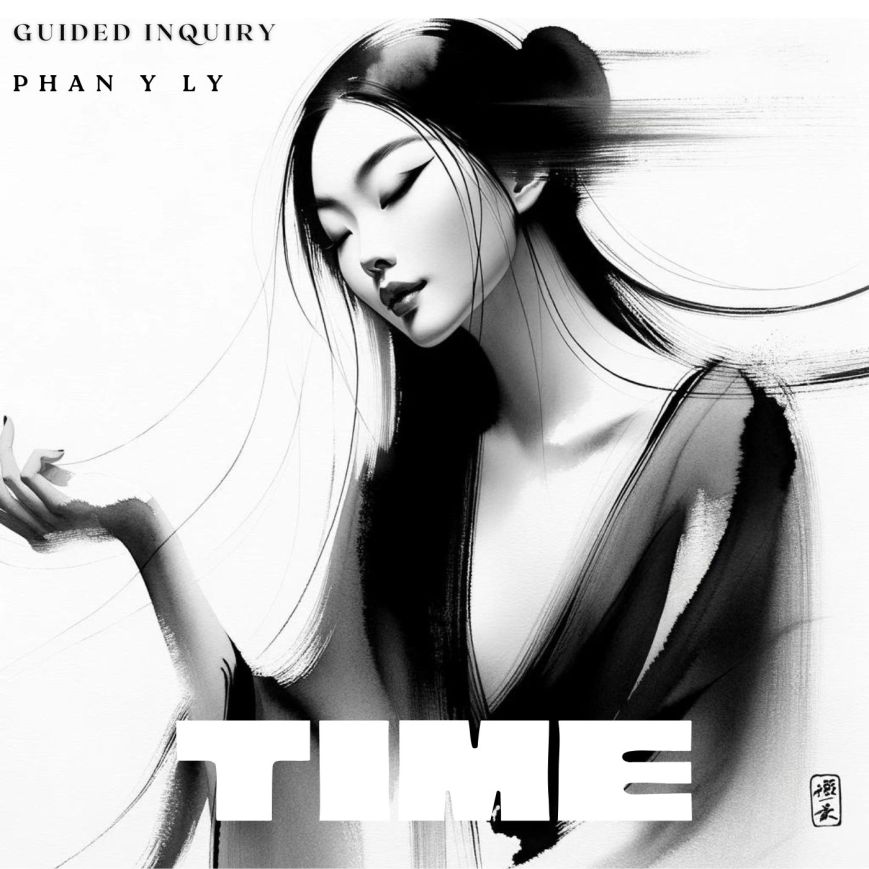
Welcome to this guided inquiry, presented by Phan Y Ly, focusing on the intricate sense of time. This journey is an invitation to immerse yourself in present moment awareness, providing a unique opportunity to observe and engage with your direct experiences, discovering the mystery of the construction of “time”.
As you embark on this path, find a sanctuary of tranquility where disturbances fade into the background. Embrace a posture that resonates with comfort and alertness, whether it be sitting, standing, or walking. This initial step is crucial in preparing you to delve into the essence of time with undivided attention.
Now, we venture into the core of our exploration—the sense of time.
-
Which stage of enlightenment is most difficult to achieve in spirituality, and why?

In the journey of spiritual enlightenment, every stage presents its unique challenges, however, a particularly intricate phase that many practitioners deeply ensnared in is the realm of non-material awareness.
(This profound discovery holds a deeply personal significance in my spiritual journey, but before I delve into that intimate narrative, let me guide you through the broader story.)
This stage (non material perception), while profoundly subtle and expansive, holds a paradoxical trap: the ego can subtly coalesce around the very essence of consciousness—experiences of boundlessness, omniscience, and the like—thereby subtly reasserting itself in a new, more elusive form.
The challenge of moving beyond the non-material perception stage largely stems from the ego’s subtle and nearly invisible entanglement with consciousness itself. At this advanced phase, the ego doesn’t attach to tangible, worldly identifiers but instead identifies with the essence of consciousness, making it exceptionally elusive and hard to transcend.
A second reason this stage is difficult to navigate is due to the spiritual practitioner’s significant progress in shedding layers of identification, which brings about a certain stability amidst suffering. This progress, while beneficial, can inadvertently reduce the impact of suffering as a catalyst for spiritual growth. When suffering becomes less “bitter,” its effectiveness in challenging and thereby dissolving the ego diminishes. This plateau can persist unless the practitioner is fortunate enough to encounter a potent catalyst for further awakening. This catalyst could take the form of guidance from a deeply insightful guru, an intrinsic drive towards truth and self-honesty, or a confrontation with experiences that undeniably challenge deeply held beliefs and the super-ego. These experiences often come from interactions with practitioners who are further along the path and can provide perspectives or challenges that are impossible to ignore or deny.
My personal breakthrough started with such an encounter on Quora, where I was faced with insights and challenges that I couldn’t sidestep. This confrontation was a turning point, propelling me beyond the confines of my previously unassailable understanding of my spiritual journey. It highlighted the subtlety and depth of the ego’s mechanisms, especially when it cloaks itself in the guise of spiritual attainment.
Back to this phenomenon of the identification with essence of consciousness, it explained why the Buddha, in his own quest for enlightenment, moved beyond the teachings of his initial mentors. They had guided him to the heights of “boundlessness” and the realm of “neither perception nor non-perception,” but it was precisely here that he recognized a pivotal juncture. These states, though transcendent, were not the end point; they were still within the domain of potential attachment and identity formation.
The Buddha’s subsequent emphasis on “anatta” or “non-self” emerges as a masterstroke in spiritual pedagogy. By highlighting the non-self, he provided a safeguard against the mind’s proclivity to grasp and conceptualize experiences, thereby forming a new identity around them. This insight points to a deeper understanding of true freedom, which is not about attaining a particular state of consciousness but realizing the inherently empty nature of all states and experiences.
True freedom, then, is not a static achievement but a dynamic process of continually recognizing and letting go of attachments, even to the most sublime spiritual experiences. It’s about seeing through the illusionary constructs of the mind, including the most subtle ones that masquerade as enlightenment itself.
“An Arahat sees Nirvana as Nirvana, he doesnot think Nirvana is me nor mine” (Mùlapariyàya sutta)
The most arduous task for many practitioners is not reaching high states of awareness but navigating the subtleties of ego that can entangle one in those very heights.
Direct experience is the crucible that verifies this understanding.
However, the moment this experience is codified into a new identity, the practitioner is once again ensnared by thoughts and conceptual constructs.
True liberation lies in the unceasing vigilance and the profound realization that there is no fixed self to attain or maintain. In this light, the path of enlightenment is not a journey towards acquiring something new but a process of uncovering and letting go of what we are not, revealing the boundless nature of awareness that is ever-present, unconstructed, and free from the confines of egoic identification.
I came to these realizations on my own, in 2021, at the final stretch of my journey, after being mired in the same spot for three years. Up until that point, I hadn’t really given much thought to the Buddha or participated in pagoda visits, despite them being a part of my Vietnamese heritage.
Discovering how Gautama Buddha, thousands of years ago, developed such a profound and comprehensive approach to teaching is truly awe-inspiring. As I ventured deeper into my own explorations and realizations, my reactions evolved from surprise to amusement, from being touched to an overwhelming sense of admiration. It was a revelation to find that everything I had just discovered had already been contemplated by Gautama Buddha with such depth and insight. His genius is truly astonishing.
-

Exploring the Essence of Unity: Is Everybody One?
Excerpt
In a world where individuality is celebrated, the question “Is everybody one?” invites us to explore a deeper layer of our existence. This inquiry is not just philosophical but also practical, as it touches upon our understanding of interconnectedness, the role of ego, and the power of pure awareness. This article delves into these concepts and offers insights into how we can experience this unity in our daily lives.
The Concept of Interconnectedness in Pure Awareness
Understanding Beyond Concepts: In the realm of pure awareness, interconnectedness is not a mere concept but a living reality. It’s an understanding that everything in the universe is interdependent and interconnected.
Transcending Mental Labels: When we perceive the world through pure awareness, without the ego’s interference, the artificial separations made by the mind begin to dissolve. We see the interdependence of all phenomena, transcending the usual distinctions.
The Illusion of Separation in Daily Life
Perceptions and Biases: Our everyday perceptions, shaped by individual biases, often obscure the reality of interconnectedness. We view ourselves as separate from others, a notion fostered by the mind’s attachment to an independent self.
The Role of the Ego: The ego strengthens this illusion of separation, making us believe in our distinctiveness from the world around us.
Experiencing Interconnectedness: A Step-by-Step Approach
- Notice Your Environment: Start by observing your surroundings, paying attention to various objects and elements.
- Observe the Labels: Recognize how your mind labels each observation and understand the implications of these labels.
- Feel the Separation: Become aware of the sense of separation these labels create and explore its nature.
- Question the Labels: Challenge these labels and try to perceive objects without them.
- Experience Directly: Engage with your environment directly, beyond the labels, for a more intimate experience.
- Perceive Interconnectedness: In this state, open yourself to the interconnectedness of all things.
- Expand Your Awareness: Apply this approach to your thoughts, emotions, and interactions, observing the shift in perception.
Exploring the Essence of Unity: Is Everybody One?
Yes, all beings are interconnected. In the practice of pure awareness, this interconnection is understood beyond the conceptual level. When one perceives the world through pure awareness, without the filter of the ego or self-centered thoughts, it becomes clear that all phenomena are interconnected and interdependent. This realization transcends the usual distinctions and separations made by the mind.
In daily life, this interconnectedness is often obscured by our individual perceptions and biases. We see ourselves as separate entities, distinct from others and the world around us. However, this separation is an illusion created by the mind’s attachment to the concept of a distinct, independent self.
To directly experience the interconnectedness of all phenomena and understand how mental labels create separation, follow these steps with openness and curiosity. This process encourages you to engage with pure awareness, stepping beyond the confines of conceptual thinking and ego-driven perceptions.
Step 1: Notice Your Immediate Environment
Start by observing your immediate surroundings. Pay attention to the objects, beings, and elements around you. This could be anything from a chair, a tree, your own body, to the sound of traffic outside.
Step 2: Observe the Labels
Notice how your mind automatically labels each observation. For example, when you see a tree, your mind might label it as “tree,” and with that label, a host of associated concepts and judgments may arise, such as “green,” “tall,” or “beautiful.” Observe this labeling process without trying to change or judge it.
Step 3: Feel the Separation
As you become aware of these labels, observe how they create a sense of separation between you and the object of your observation. The label “tree” not only categorizes the object but also subtly reinforces the notion of “me” as separate from “tree.” Feel into this sense of separation and notice its qualities. Is it rigid? Is it natural?
Step 4: Question the Labels
Now, gently question these labels. Ask yourself, “Without this label, what is this experience?” Try to perceive the tree (or any object of focus) without the mental commentary, without the label “tree,” and without the baggage that comes with it.
Step 5: Experience Directly
Allow yourself to experience the object directly, beyond the labels. This might feel like a more intimate or immediate experience of colors, shapes, textures, and the sense of being in relation to it, without the intermediary of language.
Step 6: Perceive Interconnectedness
In this space of direct experience, open yourself to the sense of interconnectedness. Observe how the tree and you are part of a larger whole, connected through air, space, light, and existence itself. Notice how this feeling contrasts with the sense of separation created by labels.
Step 7: Expand Your Awareness
Finally, expand this practice beyond the immediate object. Apply this approach of removing labels and experiencing direct interconnectedness to your thoughts, emotions, and interactions with others. Observe how the sense of separation shifts when labels are seen for what they are—convenient, but limited mental constructs.
Remember, this process is not about achieving a specific state but about cultivating an ongoing practice of seeing through the illusion of separation created by our labels and concepts. It’s a journey toward experiencing the world and ourselves with pure awareness, free from the confines of the ego
Warnings
Notice, too, how the mind will create new mental constructs around this discovery, labelling and identifying the labels as “me”, thus, if not careful, a new spiritual ego emerges 😀
FAQs on “Is Everybody One?”
What Does “Is Everybody One?” Really Mean?
It means understanding that at a fundamental level, all beings and phenomena are interconnected and interdependent, transcending the usual separations created by our minds.
How Does Pure Awareness Change Our Perception of Unity?
Pure awareness allows us to experience the world without the ego’s filters, revealing the interconnected nature of all things.
Why Do We Normally Feel Separated from Others?
This feeling of separation stems from our ego and mind’s attachment to the concept of a distinct, independent self.
Can We Practically Experience This Unity?
Yes, by following the outlined steps, we can begin to directly experience the interconnectedness of all phenomena.
What is the Role of Ego in Our Perception of Separation?
The ego reinforces the illusion of separation by maintaining the belief in our distinctiveness from others and the world.
Is Achieving Pure Awareness a Finite Goal?
No, it’s an ongoing practice of experiencing the world with an awareness that transcends the ego and mental constructs.
Conclusion
In conclusion, the question “Is everybody one?” opens up a pathway to understanding the interconnected nature of existence. Through the practice of pure awareness, we can begin to experience this unity, moving beyond the confines of the ego and mental labels. It’s a journey of continual exploration and realization, leading us to a more harmonious and interconnected way of living.
Phan Y Ly
-
Embracing Life’s Lessons: Personal Journeys of Self-Awareness and Freedom

Introduction: The Power of Personal Narratives in Self-Discovery
Life’s most profound lessons often come wrapped in personal experiences. These narratives from my students in “Awareness” online sessions, more than mere stories, are invaluable lessons in self-awareness and liberation. They offer a window into the souls of individuals on their paths to self-discovery and freedom.
“Recognizing Misunderstandings in Marriage: A Wife’s Tale”
The path to personal freedom often begins at home, in the heart of our relationships. This story shares the experience of a wife, who learned to see beyond her misconceptions and embrace the truth within her marriage.
A Personal Revelation
“Last week, my husband and I had a talk. He commented on how I seemed to have forgotten myself a bit after becoming a full-time mother. In the past, I would’ve reacted angrily, but this time, I just listened. To my surprise, I realized he was speaking without any hidden agenda.”
Growth Through Understanding
“I bravely acknowledged he had a point and shared my perspective. I was calm and clear-headed. It was an enlightening experience, showing me the importance of moving past my own misinterpretations and truly understanding his words.”
“The Depth of a Child’s Tears: A Mother’s Insight”
Understanding a child’s emotions is a critical part of parenting. This narrative illustrates a mother’s journey to empathize with her child’s feelings, leading to a deeper connection.
Shifting from Reaction to Empathy
“In my daily life, I used to think that solving the reason behind my child’s tears was the key. But, through careful observation, I realized what my child really needed was emotional support, not immediate solutions.”
Embracing Emotional Presence
“Instead of probing for reasons, I started with an embrace. This simple act brought calmness, and soon, my child opened up. It was a profound shift from seeking immediate answers to offering emotional presence.”
“The Freedom of Social Interactions: A Young Woman’s Clarity”
Maintaining inner purity amidst strong emotions is a hallmark of spiritual freedom. This story reflects a young woman’s journey to enjoy social freedom without being swayed by fleeting emotions.
Experiencing Emotional Freedom
“In my dance classes and social gatherings, I often felt strong connections. But, I learned to observe my emotions without attachment. This non-reactive state allowed me to experience emotions without getting entangled in them.”
The Art of Detachment
“By allowing emotions to come and go, I experienced a sense of liberation. Not being controlled by these emotions, I could engage with others freely, without fear of getting hurt or hurting others.”
“Overcoming the Victim Mentality: A Journey of Liberation”
Recognizing and moving beyond the ‘victim mentality’ is a pivotal step in personal growth. This section details one individual’s breakthrough from this mindset to finding genuine peace.
The Moment of Realization
“A few days ago, I became aware of my ‘always a victim’ mindset. In my kitchen, I suddenly felt light, as if a weight had been lifted off my shoulders. It was as though I could see through my prejudiced thoughts, but not be defined by them.”
The Joy of Awareness
“This experience showed me the joy and wonder of mindful observation. It motivated me to continue my practice of self-observation, which has brought me more peace than any other healing method.”
“Embracing Life’s Imperfections: Accepting the Uncomfortable”
Accepting that life is not always smooth, even on a path filled with awareness, is crucial for true spiritual awakening. This story reflects on the importance of embracing every aspect of life, including its challenges.
Shattering Illusions
“I used to believe that a mindful life meant a life without challenges. But, I’ve come to understand that life has many flavors, not just the sweet ones. Now, I find joy in observing and moving through life’s difficulties.”
Conclusion: Continuing the Journey of Self-Awareness
These personal stories from the participants of the Pure Awareness Course are not just tales; they are lessons in understanding oneself and one’s relationships. Each story is a testament to the ongoing journey of self-awareness, offering insights and guidance for anyone seeking a deeper connection with themselves and the world around them.
Phan Y Ly


